

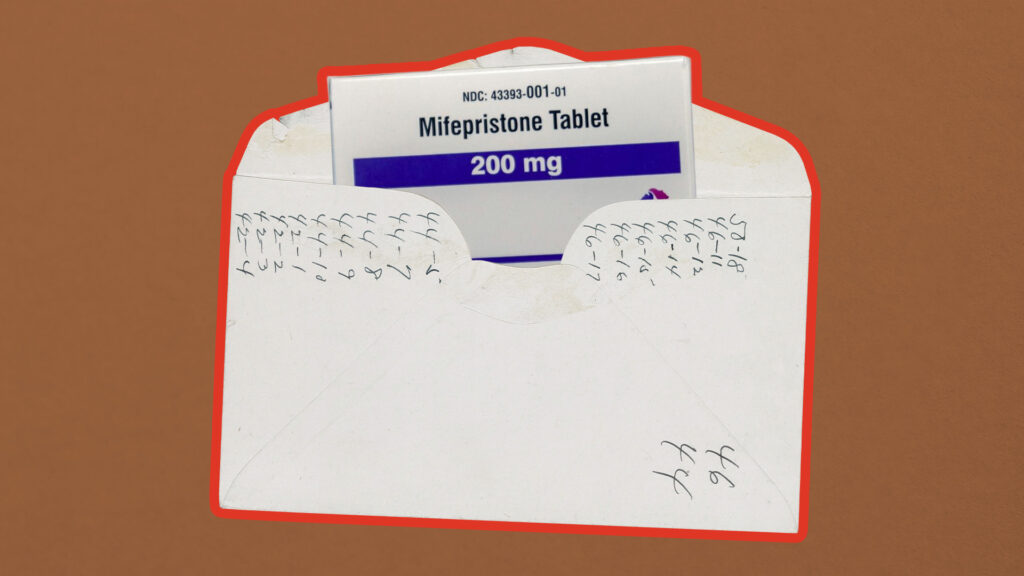
On May 1, 2026, the Fifth Circuit Court of Appeals issued a ruling temporarily reinstating older federal restrictions on mifepristone, the first drug used in the standard two-pill chemical abortion regimen. Under that order, abortion providers would no longer be able to prescribe mifepristone through telehealth consultations and send it through the mail under the FDA’s 2023 relaxed dispensing rules.
For the next several days, headlines treated the decision as a major shift in the abortion battle.
Then, on May 4, 2026, the United States Supreme Court temporarily blocked that ruling and restored telehealth and mail distribution of mifepristone while the justices review emergency appeals from the drug manufacturers.
So after all the noise, the country is right back where it started: women can still obtain abortion pills remotely, abortion providers can still continue under the Biden-era system for now, and the courts are once again arguing over the preferred distribution method for poison.
Before anyone joins the celebration or the panic, here is what you actually need to know.
1. The court did not outlaw chemical abortion.
This is the first and most important thing to understand. Even the Fifth Circuit’s original ruling did not outlaw chemical abortion. It temporarily reinstated the FDA’s older in-person dispensing rules for mifepristone. That meant abortion providers could no longer simply prescribe that one preferred drug through telehealth and mail it to a woman’s house in the same frictionless way they had been doing.
But that did not mean women could no longer get chemical abortions. It did not even mean women could no longer get mail-in chemical abortions. It simply meant one preferred poison in the standard abortion regimen was harder to distribute in the exact same way — and now, with the Supreme Court’s stay, even that temporary disruption has been paused.
Mifepristone is the first drug in the standard two-pill abortion process. It works by blocking progesterone and beginning the death of the child in the womb. The second drug, misoprostol, is then taken later to induce contractions and expel the dead or dying child. Mifepristone is preferred because it makes the process cleaner and more efficient for the abortion industry. It is not required.
Misoprostol can still be prescribed, misoprostol can still be mailed, and misoprostol can still be used by itself as an abortion method. So despite the headlines, the woman still gets the abortion, the child still dies, and the abortion industry simply changes which poison it leans on.
2. Telehealth abortion was not ended.
A lot of people talked as though telehealth abortion had been shut down. That was false when the Fifth Circuit ruling came down, and it is even more obviously false now that the Supreme Court has temporarily restored the FDA’s telehealth rules.
Remote consultations can still happen. Online abortion counseling can still happen. Providers can still facilitate chemical abortions through alternate methods. Abortion pills can still arrive by mail under the current stay.
This legal fight did not stop the abortion seeker from obtaining an abortion remotely as an objective. It did not stop the abortion provider from walking her through the process. It merely interrupted, for a matter of days, one preferred dispensing route for one preferred abortion drug.
That is all.
The practical result was never that abortion access disappeared. The practical result was that the abortion industry prepared to swap protocols and keep killing children.
3. The abortion industry was always going to adapt almost immediately.
Do not imagine abortion providers were sitting in panic because their business just collapsed. Their business did not collapse. Their preferred convenience was briefly interrupted, and even that interruption lasted only until the Supreme Court’s administrative stay on May 4.
Had the Fifth Circuit order remained in place, providers were already discussing the same predictable protocol shifts: increased use of misoprostol-only abortions, alternate pickup systems, modified prescribing practices, and continued exploitation of every legal gray area available.
In short, the customer still gets the product. The product is just delivered through a slightly altered method.
That should tell you how little this legal battle actually changes.
4. The past three days prove how hollow these procedural “victories” really are.
This should surprise no one.
For roughly seventy-two hours, the Fifth Circuit ruling was sold as a major blow to mail-order abortion. Headlines ran wild. Social media erupted. Organizations rushed to declare progress.
Then the Supreme Court stepped in and temporarily restored the exact telehealth and mail distribution system everyone had been celebrating as defeated.
That should be a lesson.
When your “victories” can vanish in three days because they were built on administrative procedure rather than equal justice, you are not ending abortion. You are celebrating temporary turbulence in the management of abortion.
One preferred poison became briefly less convenient, and even that inconvenience has now been suspended.
5. This ruling exposes the same old problem: America is still regulating abortion, not abolishing it.
That remains the central takeaway.
The law is still not speaking the language of homicide. The law is not saying, “No child in the womb may be intentionally poisoned.” The law is saying, “Which poison may be dispensed through which channel, and under what federal rules?”
That is not a change in justice. That is a change in procedure.
The child remains outside the shelter of homicide statutes. The mother remains free to seek the killing. The provider remains free to facilitate the killing. Chemical abortion remains available.
This was not the end of chemical abortion. It was not the end of telehealth abortion. It was not the end of mail-in abortion. It was a three-day legal argument over the administration of poison.
America is still not abolishing child killing.
America is supervising it.
And that is why the answer remains what it has always been: not tighter management, but equal justice by abolishing abortion.